
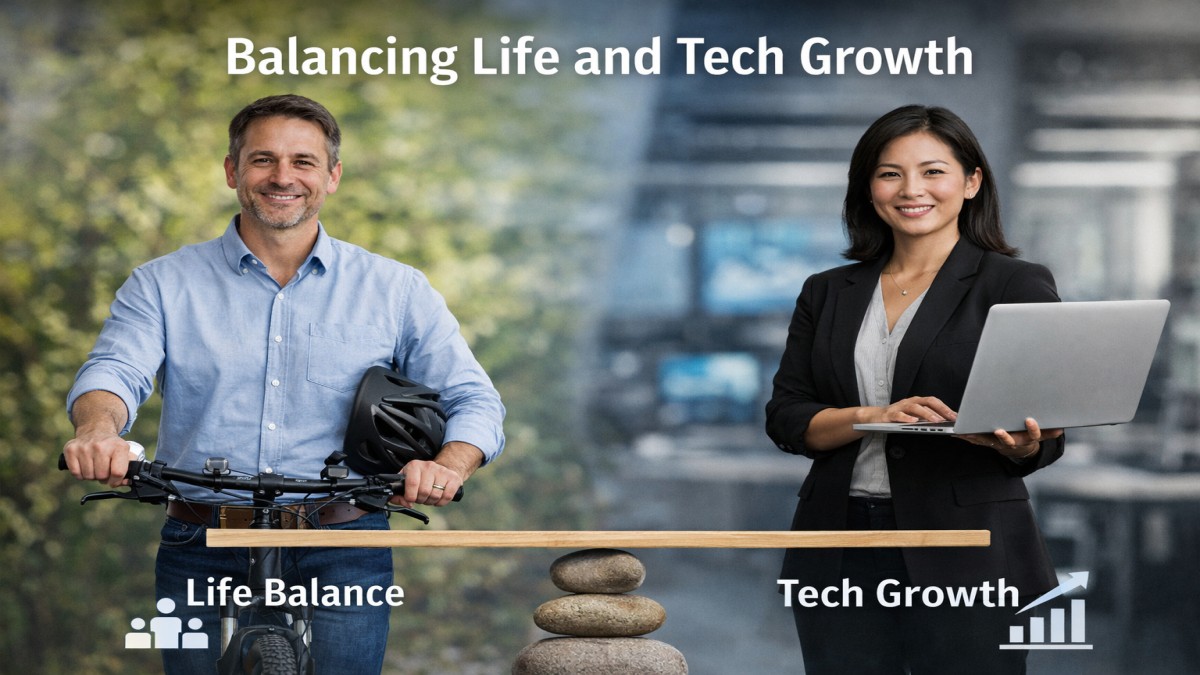
There is a popular image of the successful software engineer as someone who spends every waking hour in front of a screen, grinding through code and studying for the next big interview. But if you talk to engineers who have actually reached the top of their field, staff engineers at Google, engineering directors at Amazon, VPs at Meta, you hear a very different story. Many of them credit their long-term success not just to their technical discipline, but to the balance they maintain between their professional ambitions and their life outside of work.
In 2026, the conversation around work-life balance in tech has matured. It is no longer about choosing between career success and a fulfilling personal life. It is about building a sustainable approach that supports both. Here is how the best professionals in the industry manage to grow their careers without sacrificing the things that keep them energized, creative, and motivated over the long haul.
Why Balance Makes You a Better Professional
Research consistently shows that professionals who maintain interests and activities outside their primary work perform better over time than those who are exclusively focused on their jobs. Regular physical activity improves cognitive function and decision-making. Time spent outdoors reduces stress and improves the ability to focus during deep work sessions. Hobbies and creative pursuits build the kind of lateral thinking skills that help engineers approach technical problems from fresh angles.
This is not about working less. It is about working smarter by maintaining the physical and mental energy needed to perform at your best consistently over years and decades. The engineers who burn out after three years of intense grinding are not the ones who reach staff level or director level. The ones who get there are those who figure out how to sustain high performance without running themselves into the ground.
If you are struggling to find the right balance between career preparation and the rest of your life, talking to someone who has already navigated that challenge can be genuinely helpful. A mentor who has built a successful career at a top company while maintaining a fulfilling personal life can share practical strategies for managing your time, energy, and priorities in a way that supports both your professional goals and your overall wellbeing.
Efficient Career Preparation Over Brute Force Study
One of the biggest traps engineers fall into when preparing for career milestones like promotions or interviews is the belief that more hours of preparation always equals better outcomes. In reality, the quality and focus of your preparation matters far more than the sheer number of hours you put in.
An engineer who spends two focused hours per day on targeted interview preparation with clear goals and expert feedback will outperform someone who spends six unfocused hours reading random system design articles and solving easy coding problems. The first approach is sustainable and produces compounding results. The second leads to fatigue, diminishing returns, and the kind of anxiety that actually hurts interview performance.
This is one of the key reasons why working with experienced professionals during your preparation is so valuable. A mentor or mock interviewer can quickly identify the specific areas where you need the most improvement and help you focus your limited preparation time on the activities that will have the biggest impact. This targeted approach lets you prepare effectively without sacrificing every evening and weekend for months.
Making the Most of Focused Mock Practice
Mock interviews are one of the most time-efficient preparation activities available because they compress learning that would take weeks of self-study into a single focused session. A 60-minute mock interview with an experienced FAANG interviewer can reveal blind spots in your system design communication, weaknesses in your behavioral stories, and specific habits that are costing you points, all in a fraction of the time it would take to identify these issues through solo practice.
Booking mock interviews with professionals from top tech companies is an investment in efficiency as much as effectiveness. Instead of guessing whether your preparation is on track, you get concrete, calibrated feedback that tells you exactly where you stand and what to focus on next. This clarity lets you prepare with confidence and reclaim the time you might otherwise waste on unproductive study activities.
Most candidates find that three to four well-spaced mock sessions over the course of their preparation window provide enough feedback and practice to significantly improve their performance, without requiring them to abandon every other commitment in their life for the duration.
Sustainable Career Growth Strategies
The most successful approach to tech career growth is one that you can sustain over years, not one that requires unsustainable bursts of intense effort followed by periods of recovery and disengagement. Here are a few principles that high-performing engineers use to grow their careers steadily without burning out.
First, invest in mentorship relationships that provide ongoing guidance rather than scrambling for advice only when a crisis arises. Regular conversations with someone who understands your career goals and can provide consistent feedback help you make better decisions in real time and avoid the need for last-minute, high-pressure course corrections.
Second, build career development habits into your weekly routine rather than treating it as a separate project. Spend 30 minutes each week documenting your accomplishments. Set aside time monthly to review your career goals and assess your progress. Schedule periodic check-ins with a mentor to stay on track. Career platforms like BeTopTen make it easy to maintain this kind of structured, ongoing development by connecting you with experienced professionals who can serve as your long-term career advisors.
Third, protect your time for the activities that recharge you. A structured approach to work-life balance is not a luxury. Whether that means hiking, traveling, spending time with family, or pursuing a hobby that has nothing to do with technology, these activities are not distractions from your career. They are the fuel that makes sustained high performance possible.
Helping Others Find Their Balance
If you are an experienced tech professional who has figured out how to build a successful career while maintaining a rich personal life, your perspective is incredibly valuable to engineers who are struggling to find that balance. Many talented professionals either overwork themselves to the point of burnout or pull back from their career ambitions because they believe success requires sacrificing everything else.
You can become a mentor on BeTopTen and help engineers develop sustainable career strategies that support both their professional goals and their personal fulfillment. Sharing what you have learned about managing time, setting priorities, and preparing efficiently can make a real difference in someone else’s career and quality of life.
Building a Career That Lasts
The tech industry moves fast, and it can feel like you need to move faster to keep up. But the professionals who build the most impressive long-term careers are not the ones who sprint the hardest. They are the ones who find a pace they can sustain, invest their energy wisely, and maintain the physical and mental health needed to perform at their best over decades rather than just years.
Whether you are preparing for your next big career move or thinking about how to grow steadily over the next five years, the key is finding an approach that works for your whole life, not just your resume. The tools and support to help you do that are available right now. The professionals who use them wisely are the ones who end up with both the careers and the lives they actually want.
